- Блоги
- Gas assist injection molding design guide
- gas assisted injection molding
- gas assist molding
- gas assist injection mold development
- gas assist injection molding services
- gas assist injection molding manufacturer
- gas assist injection molding applications
- gas assist injection molding materials
- gas assist injection molding

sales@gptmold.com


Gas Assisted Injection Molding FAQ: Common Questions Answered
Запрос- Описание
Gas Assisted Injection Molding FAQ: Common Questions Answered
Gas-assisted injection molding (GAIM) is a powerful process, but it raises a lot of practical questions — from how it works and what it costs, to when to choose it over microcellular molding. Here we answer the questions engineers and buyers ask us most, organized by topic.
Jump to a topic
01 · Basics
Basics & definition
QWhat is gas-assisted injection molding (GAIM)?
GAIM is a molding process where nitrogen is injected into the still-molten polymer inside the mold after a partial (short-shot) fill. The gas creates an internal hollow channel and keeps packing the part from the inside while it cools — cutting weight and preventing sink marks.
QWhat is the main purpose of GAIM?
To reduce sink marks and part weight on thick sections, lower holding pressure and internal stress, and improve dimensional stability — usually all at once on thick-walled parts such as handles, ribs, bosses and structural beams.
QIs GAIM the same as microcellular injection molding?
Нет. GAIM injects gas after partial filling to create one defined hollow channel. Microcellular molding dissolves supercritical gas into the melt and nucleates many micro-bubbles across the wall. They are different technologies with different results.
QWhat gas is used, and is it safe?
Nitrogen (N₂) is almost always used — it is inert, inexpensive and non-reactive. The gas is vented after the part is rigid, so no gas remains trapped in the final product.
02 · Process
Process & results
QWhat does “short-shot / partial fill” mean?
The cavity is filled to about 50–70% of its volume with plastic before gas is introduced. The gas then pushes the remaining melt to the cavity walls, completing the fill while forming the hollow channel in the thick section.
QHow does gas prevent sink marks?
Gas pressure holds the molten plastic against the cavity wall during cooling, compensating for volumetric shrinkage. Because the gas stays mobile after the gate freezes, it keeps packing the thick section when conventional plastic packing would have stopped.
QHow much weight can I save?
On suitable thick-section designs, parts are typically 20–40% lighter than a solid equivalent — without giving up stiffness, because ribs and beams are hollowed rather than removed.
QDoes GAIM shorten cycle time?
Usually yes. With a thinner effective wall, cooling is faster; and lower holding pressure can reduce the needed packing time. Exact savings depend on part geometry and material.
03 · Mold
Mold & equipment
QDo I need a special injection molding machine?
GAIM needs a nitrogen source and a gas pressure control unit added to a standard injection molding machine, plus gas pins in the mold. Many modern machines can be fitted with a GAIM gas unit.
QWhat is a gas pin / gas inlet?
A gas pin is the injection point in the mold where nitrogen enters the cavity. Its location and the gas channel layout determine where the hollow forms — so they are designed together with the gate and the part geometry.
QWhat mold design changes does GAIM need?
Gas channels along thick sections, gate and gas-inlet placement that supports the flow path, controlled venting, and balanced cooling. These are best decided during design-for-manufacturability, before the steel is cut.
QCan an existing mold be converted to GAIM?
Sometimes, if the part has a natural thick section and room to add gas pins and channels. A feasibility review of the existing mold and part is the right first step — not all designs convert cleanly.
04 · Materials
Materials & applications
QWhat materials work well with GAIM?
Most thermoplastics: PP, ABS, PA6/PA66, PC, PBT, PET, HDPE and PC/ABS blends. Materials with a broad molding window and predictable shrinkage behavior give the most consistent results.
QWhich parts benefit most?
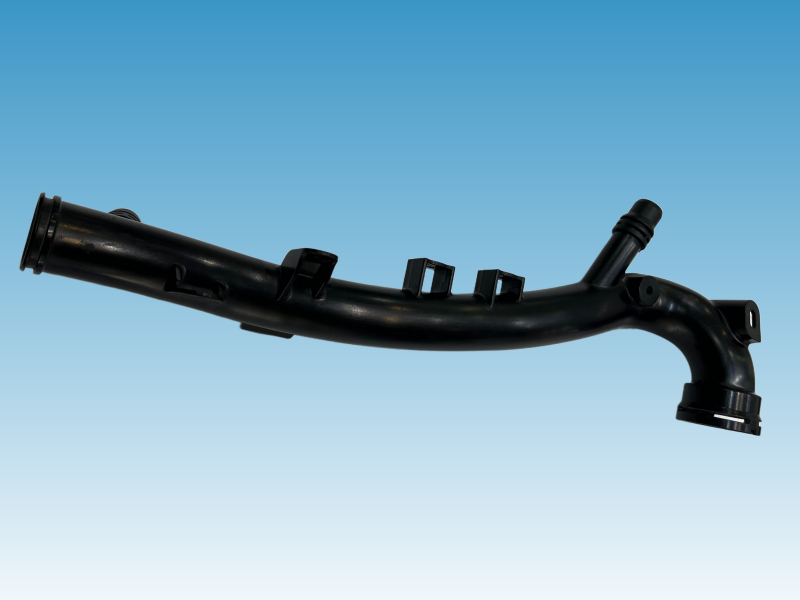
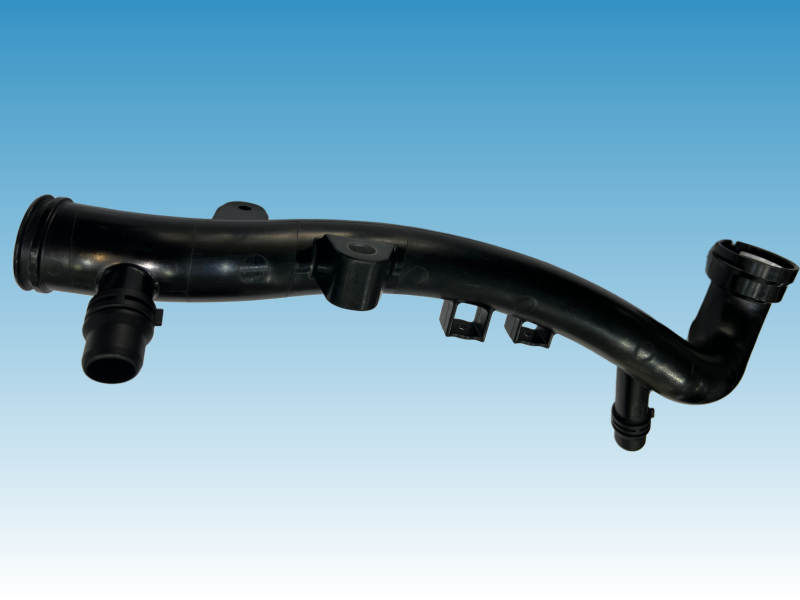
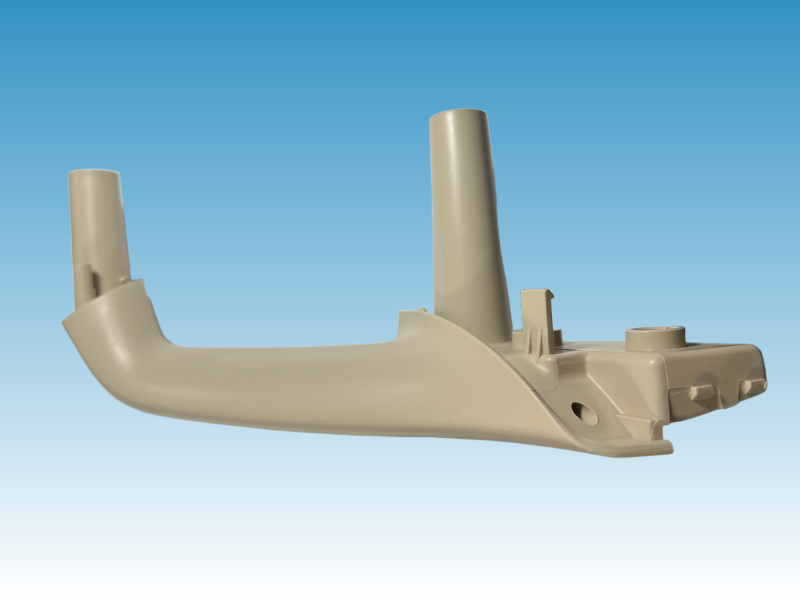
Parts with intentional thick sections and strict weight or surface targets: door and tool handles, mirror housings, spoilers, frames and beams, thick rib networks, and long slender structural parts that would warp or sink in conventional molding.
QWhen should GAIM not be used?
For thin-wall, simple, high-clarity parts where a hollow channel adds no value, and when the geometry leaves no stable path for the gas. Conventional molding is usually the better, lower-cost choice in those cases.
05 · Quality
Quality & defects
QWhat is “blow through”?
Gas breaking through the surface, leaving a rupture, whitening or a visible defect. It is usually a process-control issue — gas delay time, peak pressure or ramp profile need adjusting, or the wall near the gas path is too thin.
QWhat is “gas fingering”?
An unstable gas front that branches off the intended channel, reducing stiffness and repeatability. It is often geometry-driven, or the result of too little short-shot melt or an overly mobile melt core.
QIs dimensional repeatability good?
Yes, when the mold is designed for GAIM — predictable gas channels and even cooling give stable, repeatable dimensions across production. Repeatability depends on the mold and the gas control system working as a system.
QCan GAIM parts be painted, welded or assembled normally?
Yes. The show surface is a solid skin, so standard painting, coating, welding and assembly apply. Sink-free, flat surfaces usually make finishing easier, not harder.
06 · Cost & selection
Cost & choosing the right process
QIs GAIM more expensive than conventional molding?
Tooling costs a little more (gas pins and channels), but per-part material cost drops and cycles are often shorter. On suitable parts, the total part cost is usually lower at production volumes. A quick feasibility review shows the numbers for your part.
QGAIM or microcellular molding — how do I choose?
Choose GAIM when the design centers on thick, sink-prone sections and a hollow channel is acceptable. Choose microcellular when you want uniform low-density parts or thin-wall cycle savings and can manage the surface finish. Send us your part; we will recommend the right process.
QHow do I start a GAIM project or get a quote?
Send your part geometry (2D drawings or 3D files), material, critical dimensions, surface requirements and target quantities. We will do a design-for-manufacturability review, confirm whether GAIM suits the part, and quote the mold and production scope.
A good GAIM outcome starts with the mold. Early engineering of the gas channel, gate and venting is what separates a smooth project from rework.
Still have a question about your part?
Share your geometry, material and intended application — we will review whether GAIM is right for your project and answer with a concrete recommendation.
Ask us / request a DFM review
sales@gptmold.com · gasassistinjection.com
Блоги, Ресурс
ОТПРАВИТЬ ЗАПРОС
Сопутствующие товары
- Запросить предложение
LET’S TALK ABOUT YOUR PROJECT
From mold development to part production.
Share your drawing, material and expected production volume.
Gas assist injection molding and mold development by GPTMOLD.
Mold manufacturing and part production in our own factory.
About our companyContact
Tell us about your project.
sales@gptmold.comТель: +86 755 2308 9686
Contact our team
WhatsApp: +86 135 3051 6428
© GPTMOLD 2024. Все права защищены