A complete, engineering-level guide to how nitrogen-assisted molding produces lighter, stronger, sink-free plastic parts — and when it makes sense for your product.
20–40%lighter than solid parts
Nonsink marks on thick sections
↓warpage & internal stress
N₂inert gas drives the melt
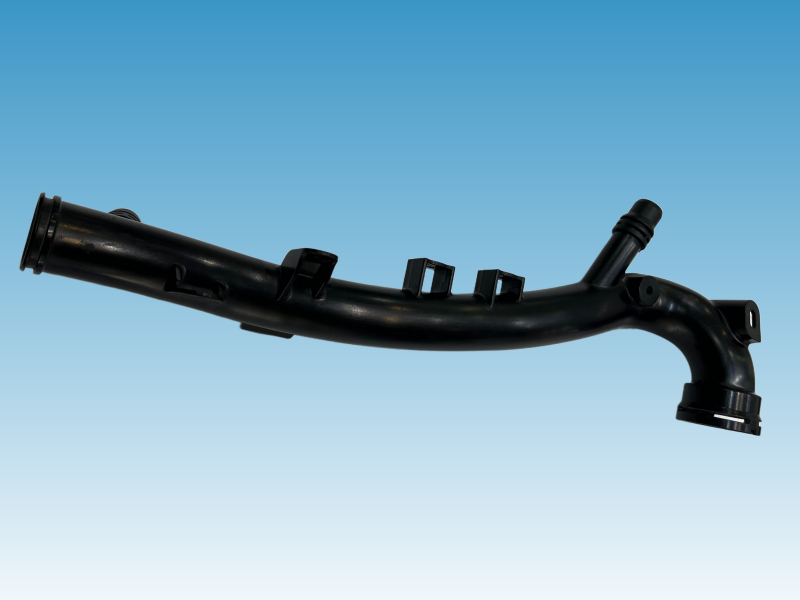
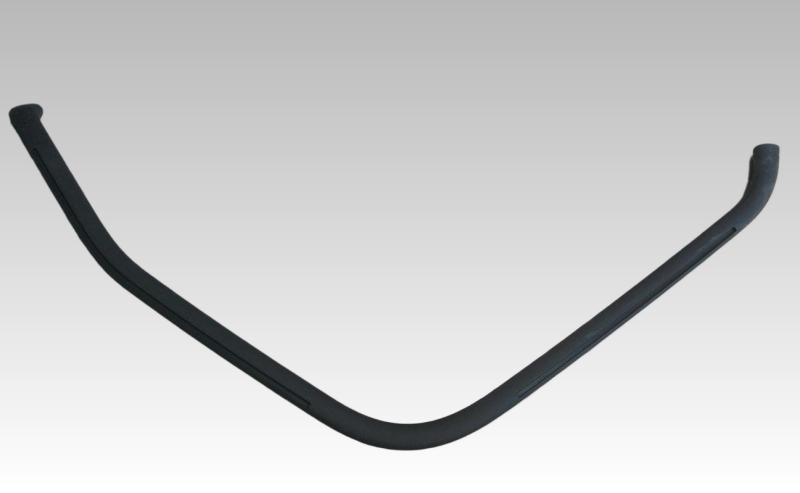
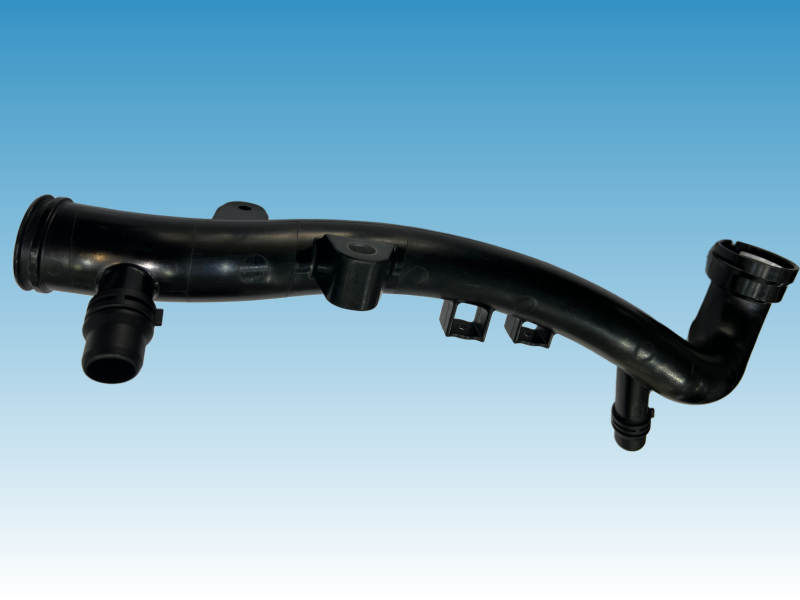
Same part, two processes: gas-assisted molding leaves a hollow channel inside thick sections — cutting weight, preventing sink marks, and reducing warpage.
Introduction
The problem gas-assisted molding solves
If you work with plastic parts that havethick walls, long ribs, or complex hollow sections, you have likely faced the classic trade-offs of conventional injection molding: sink marks on thick bosses, unacceptable warpage, heavy part weight, and long cycle times.
Gas-assisted injection molding (GAIM)was developed precisely to solve these problems — and it is one of the most effective ways to produce strong, lightweight, dimensionally stable parts at lower cost.
This guide explains what gas-assisted injection molding is, how the process works, what it can do for your product, and when it makes sense to use it.
Definition
What is gas-assisted injection molding?
Gas-assisted injection molding is aspecialized injection molding processin which an inert gas — almost alwaysnitrogen (N₂)— is injected into the still-molten polymer inside the mold cavity during or shortly after the short-shot phase. The high-pressure gas pushes the melt forward to fill the cavity completely, and then continues to hold pressure from inside while the part cools.
The result is a part withhollow internal channelsrunning through its thick sections, a fully filled outer geometry, and dramatically improved quality compared with solid molding.
Two common acronyms you will see areGAIM (gas-assisted injection molding) andGIM.
The gas travels through channels designed into the thick sections, keeping a thin solid outer skin while the interior stays hollow.
Step by step
How the process works
Gas-assisted molding follows a distinct four-stage cycle.
01
Partial fill
Molten plastic is injected at roughly50–70%of cavity volume, leaving the thickest sections unfilled.
02
Gas injection
Nitrogen is injected under pressure through gas pins; it pushes the melt against the mold walls to complete the fill.
03
Gas packing
Gas pressure is maintained during cooling, pressing the plastic against the cavity walls to prevent shrinkage and sink marks.
04
Vent & eject
Once the part is rigid enough, the gas is vented, the mold opens, and the part is ejected — then the cycle repeats.
Key insight:the gas does the heavy lifting. Only a thin outer skin needs to cool — so cooling is faster, and molded-in stress is far lower.
Why use it
Key advantages
Up to 20–40% lighter
Hollow channels remove material, cutting part weight without sacrificing stiffness.
Less warpage
Lower molded-in stress and more uniform cooling reduce distortion.
No sink marks
Gas packing counteracts shrinkage on thick bosses, ribs, and hubs.
Shorter cycle times
Thinner effective walls cool faster, so each part is produced more quickly.
Design freedom
Ribs and structural sections can be hollowed out — stiffer parts without heavy masses.
Lower material & energy cost
Less resin per part, lower clamp tonnage, and shorter cycles reduce unit cost.
Where it’s used
Common applications
Automotive
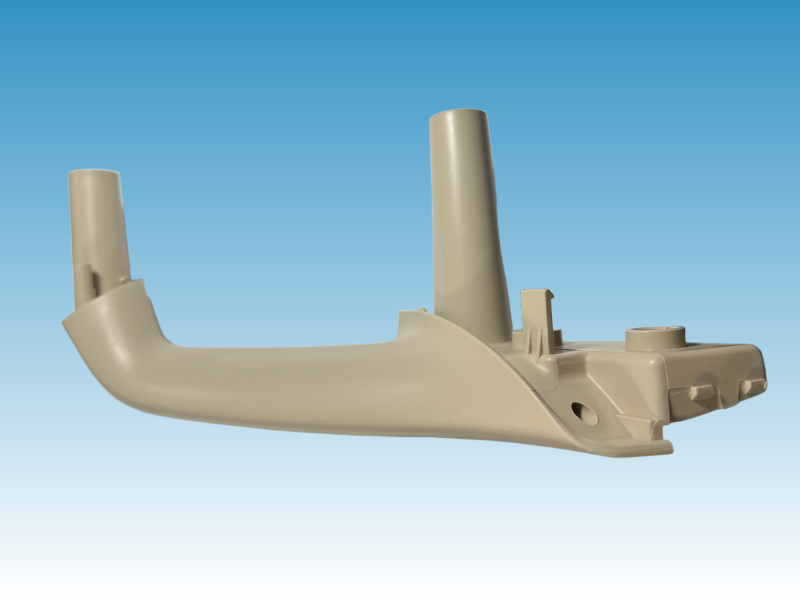
Door handles, mirror housings, spoilers, seat backs, instrument panels, pedals.
Home appliances
Washing machine drums and tubs, refrigerator handles, vacuum bodies.
Power tool bodies, medical device housings, long handles.
Ideal for long & thick parts
Long, slender parts and thick-wall parts that would warp or sink conventionally.
Gas-assisted molding is especially valuable forlong, slender partsandthick-wall partsthat would otherwise warp, sink, or be needlessly heavy.
Process compatibility
Suitable materials
Most thermoplastics respond well to gas-assisted molding. The process works best with materials that have a broad molding window and predictable shrinkage behavior.
PPpolypropylene ABS PA6 / PA66nylon PCpolycarbonate PBT PET HDPE PC/ABSblends
Side by side
Gas-assisted vs. conventional molding
Factor
Conventional molding
Gas-assisted molding
Wall thickness
Limited to avoid sink / warp
Can use thick structural sections
Part weight
Higher
Lower (hollow channels)
Cycle time
Longer on thick parts
Shorter
Warpage risk
Higher
Lower
Sink marks
Common on thick areas
Eliminated
Tooling complexity
Simpler
Requires gas channels & pins
Unit cost (large volumes)
Higher material cost
Lower overall
When to use it:GAIM pays off most when a part is thick-walled, long, or needs to be light and stiff. For thin-wall, simple, high-clarity parts, conventional molding is usually more appropriate.
Getting it right
Design considerations for success
A successful gas-assisted project starts in the design phase.
Design gas channelsLay gas channels along thick sections so gas flows predictably.
Keep walls consistentMaintain even wall thickness wherever possible.
Position gates & gas pointsControl the gas path by placing gates and injection points carefully.
Integrate ribs & bossesLet gas hollow out ribs and bosses for stiffness without weight.
Partner with an expert mold makerValidate the channel layout before steel is cut — this avoids costly rework.
Have a part in mind?
AtInjection assistée par gaz, we design and manufacture high-precision molds for gas-assisted and conventional molding across automotive, appliance, and industrial applications. From design-for-manufacturability (DFM) to production, we help you get parts right the first time.